C++ 17 字符串转换
C++ 17 字符串转换
枫C++ 17 字符串转换
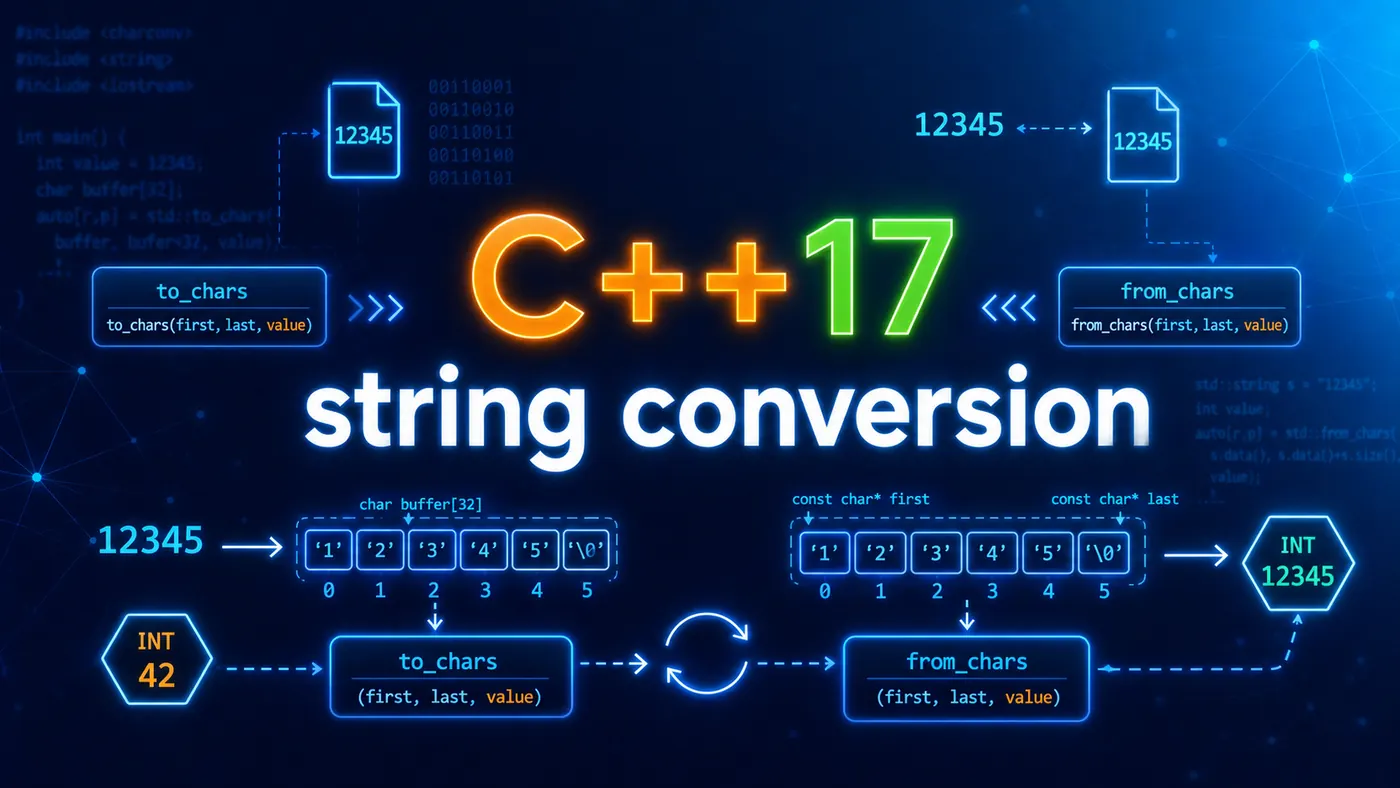
提到 C++17 的字符串转换,最值得记住的是
<charconv>头文件里的std::to_chars和std::from_chars。它们提供了一种更轻量、更高性能的数值与字符序列转换方式。
1. 为什么还需要新的字符串转换接口?
在这之前,我们常见的做法有:
std::stoistd::stolstd::to_stringstringstream
这些接口都能完成任务,但也有一些问题:
- 有的依赖区域设置(locale)
- 有的性能一般
- 有的会抛异常
stringstream用起来偏重
而 to_chars / from_chars 的目标就是提供一个更底层、更直接的转换接口。
2. std::to_chars
std::to_chars 用于把数值写入字符缓冲区。
基本示例
1 |
|
输出:
1 | 12345 |
特点
- 不分配内存
- 不抛异常
- 使用调用者提供的缓冲区
3. std::from_chars
std::from_chars 用于从字符序列解析数值。
基本示例
1 |
|
输出:
1 | 2024 |
4. 和 stoi / to_string 相比有什么区别?
4.1 不抛异常
from_chars 和 to_chars 用错误码表示结果:
1 | result.ec == std::errc() |
这样在高频转换场景里会更稳一些。
4.2 更偏底层
你要自己准备缓冲区,也要自己处理长度,所以它没有那么“傻瓜式”,但换来的就是更轻量。
4.3 更适合性能敏感场景
比如日志系统、协议解析、序列化组件这类代码,charconv 往往比 stringstream 更合适。
5. 一个解析示例
1 |
|
这里 ret.ptr 可以帮助我们知道解析停在了哪里。
6. 使用时要注意的点
6.1 它操作的是字符区间,不是 std::string 返回值
这套接口比较偏 C 风格缓冲区思路,所以第一次接触时可能会觉得不如 stoi 直观。
6.2 需要自己保证缓冲区足够大
如果 to_chars 的目标缓冲区太小,转换会失败。
6.3 浮点支持情况要看实现
整数支持通常没问题,但浮点相关支持在不同编译器和标准库实现里,历史上兼容情况差异更明显一些。
总结
C++17 的 <charconv> 给数值和字符串之间的转换提供了一套更底层、更轻量的方案。
如果你只是偶尔做简单转换,stoi、to_string 仍然够用;但如果你在意性能、异常开销或者想手动控制缓冲区,那么 std::to_chars 和 std::from_chars 就更值得关注。