C++ 17 std::string_view
C++ 17 std::string_view
枫C++ 17 std::string_view
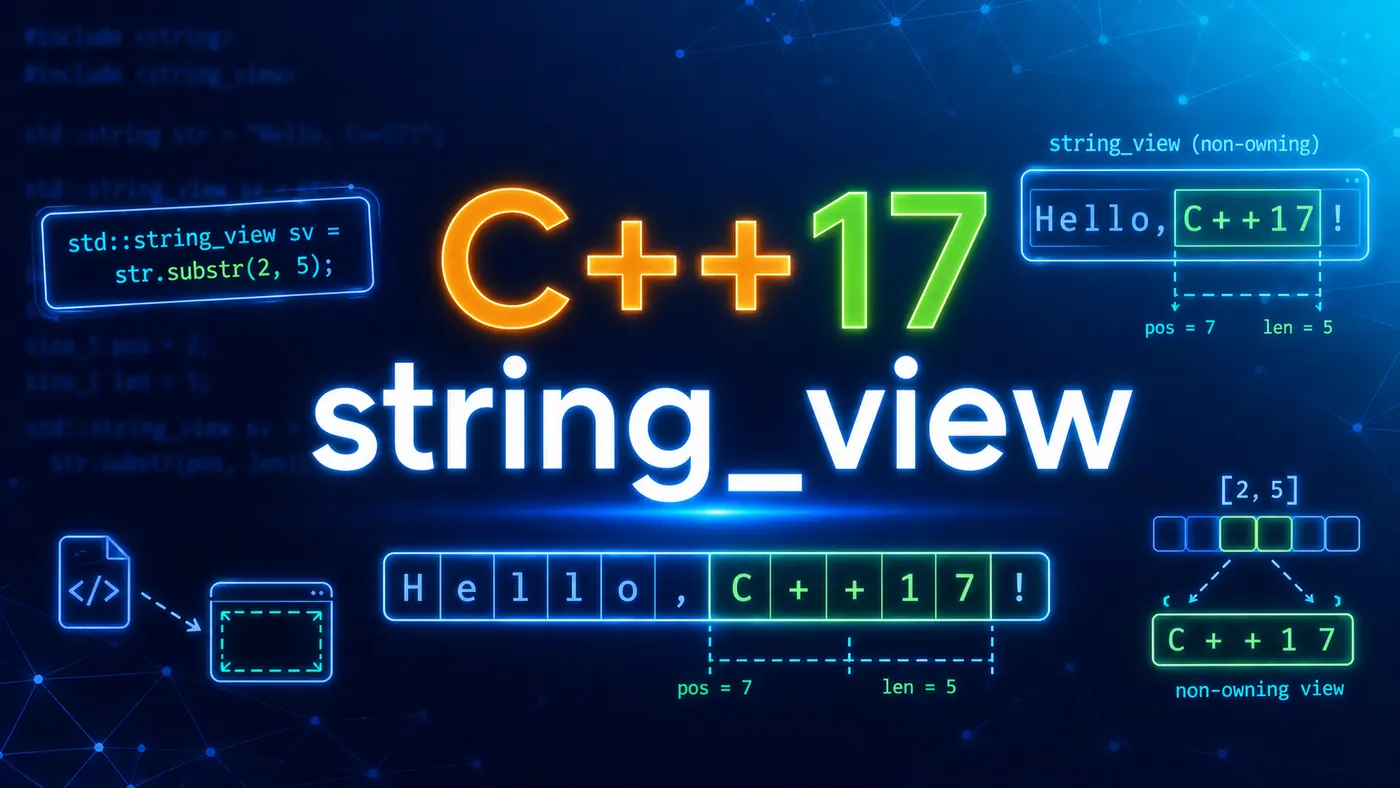
std::string_view可以理解成“对一段字符串的只读视图”。它本身不拥有字符串数据,只是记录一段字符范围,因此非常轻量。
1. 为什么需要 string_view?
以前函数参数常见写法一般是:
const std::string&const char*
这两种都能用,但各有问题:
const std::string&对字符串字面量不够灵活const char*只看指针不看长度
std::string_view 则正好补上了“只读、不拷贝、带长度”的这一层。
2. 基本使用
1 |
|
3. 它不会拷贝字符串
这是它最大的特点之一:
1 | void print(std::string_view sv) |
调用时无论传:
std::string- 字符串字面量
- 部分字符区间
通常都很方便,而且不需要新分配内存。
4. 常见操作
4.1 截取前缀后缀
1 | string_view sv = "abcdef"; |
4.2 子串
1 | auto sub = sv.substr(1, 3); |
4.3 比较
1 | if (sv == "abc") { |
5. 一个很常见的参数场景
1 |
|
这类接口如果写成 string_view,通常会比 const std::string& 更灵活。
6. 使用时最重要的注意点
6.1 它不拥有数据
这意味着:
1 | std::string_view sv; |
离开作用域后,sv 仍然指向原来的内存位置,但那块数据已经失效了。
这就是 string_view 最容易踩的坑。
6.2 适合只读,不适合修改
它本来就是视图,不负责改内容。
6.3 生命周期必须比 view 长
记住这一点,基本就能避免大部分问题。
总结
std::string_view 是 C++17 里非常常用的一个类型。
它轻量、只读、不拷贝,很适合做函数参数和字符串切片处理。唯一要特别小心的就是生命周期问题,因为它只是“看着字符串”,并不拥有字符串。